Veneers, Plywood, Paint, Hardwood – Which is right for you?
You may not know this but there are many different ways and methods to reface your cabinets.
Sometimes, even the definition of refacing is used loosely.
In this article we’re going to outline the difference between refacing and a close relative – Re-dooring. We’ll also dive into the different materials used to reface cabinets, their advantages, and also which material we prefer to use.
Refacing Vs Re-dooring
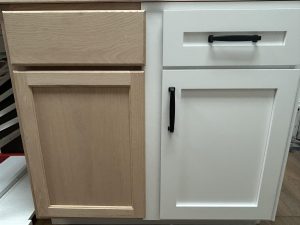
Many refacing companies will utilize a close relative of refacing called re-dooring. Now, this method is very close to traditional refacing. New drawer fronts and doors are still built and installed per each individual cabinet in the project. The key difference is how the cabinet boxes are treated. In cabinet refacing, we apply new material to the cabinet boxes. Be that veneer, hardwood, or plywood the old boxes get the exterior completely covered in a new material. With re-dooring, the existing boxes are simply left as is or painted to match the new doors.
This method is typically used to reduce the cost of the project. The boxes typically receive minimal prep work (sanding/filling) to achieve the cost reduction. This method can work well, especially if you’re using full overlay doors that will cover the majority of the old cabinet boxes.
The main drawback is that field applied paint is less durable than a factory finish. Without careful maintenance & treatment it can chip/peel over time.
The materials we’re going to discuss in this article are not used in re-dooring. We’re referring specifically to the new materials applied to the cabinet boxes in cabinet refacing.
Material 1 – Veneer
Veneers often get a poor reputation among homeowners in the refacing industry. It’s often seen as a cheaper way to reface the cabinet boxes.
A veneer is a very thin material, often between 0.3 mm and 1.0 mm thick, that is applied to the cabinet boxes using an adhesive. Sometimes that adhesive is applied on site, such as contact cement. Sometimes, the adhesive comes already applied to the veneer in the form of a pressure sensitive adhesive (peel & stick).
We don’t typically use veneers on our installs. Sure, we use them in certain situations where things are tight, but for the most part we avoid them for the majority of the reface.
The main reason is that it really isn’t that much of a cost difference between veneer and plywood. Both methods involve quite a bit of labor. The material costs are very similar though. We think the veneer ends up being more expensive because we have to cut all of the stile and rail widths on site, instead of them being precut in the factory.
The main drawback to veneers is that they require more prep work to get them to look good. It’s such thin material that if the cabinet boxes aren’t meticulously prepped, small imperfections will telegraph through the final result.
That’s why most homeowners are adverse to veneers because of the reputation they get from improper/rushed installs. Don’t get me wrong, veneers can look beautiful if well done. But we just don’t think it’s worth the extra time and effort, especially when we have better options.
Solid Hardwood
The opposite end of the spectrum from veneers are solid hardwoods. These are often 3/16” thick, resulting in a very robust and durable refacing stock.
Many customers love the look and feel of these hardwoods and appreciate their strength and durability.
These are a great option for clients that are willing to pay a premium for high quality materials.
1/8” Plywood
This is by far our most preferred method of refacing. Typically, plywood is 10-25% less expensive than solid hardwood. Yet, it also offers a very similar level of durability and exquisite final look.
We apply our plywood with an industrial grade contact cement, which means it will never delaminate. It’s also thick enough so that we don’t have to charge clients for hours and hours of additional prep work that’s involved with veneers.
For these reasons:
Lower cost than hardwoods
Far more durable than veneers & easier install
We prefer 1/8” plywood refacing method.