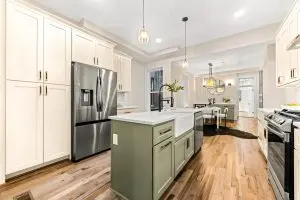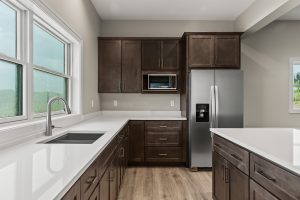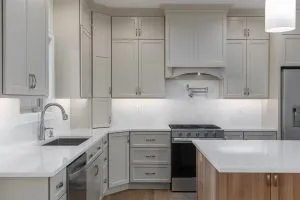
As much as we love cabinet refacing there are certainly drawbacks. As there are with almost any product or service.
In this article we’re going to address them
1. No Layout Changes
This is probably the biggest drawback of cabinet refacing (and the most obvious). Cabinet refacing is designed to totally transform the appearance of your kitchen as it is now. And though that seems pretty straightforward it refers to a lot of things that many homeowners don’t consider.
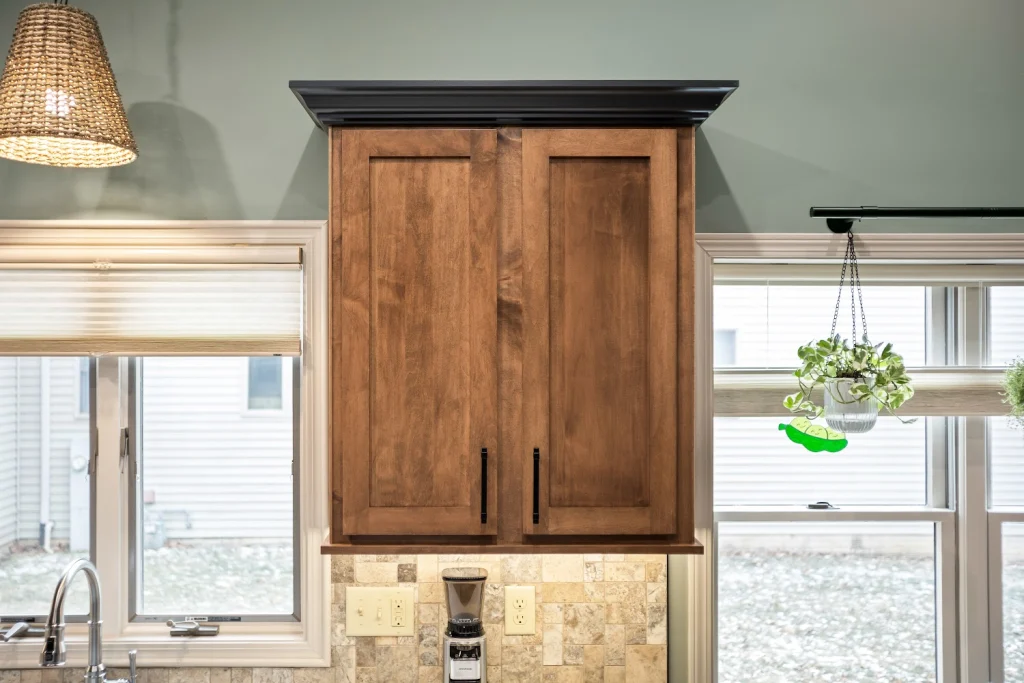
- Height of Cabinets: We can certainly add taller crown profiles but if your cabinets sit a foot below your current ceiling, it typically doesn’t make sense financially to add custom cabinets above to make them taller. Most people are better off replacing at this point.
- Drawers: In refacing we don’t add drawers or change the number and configuration of what is there now. We often install roll trays in place of these. In refacing we can REPLACE drawers with new drawer boxes and soft close function.
- Peninsulas: I’ve seen it a few times where clients want to remove a peninsula and replace it with an island. In genera, refacing is not a good fit for this scenario. Projects that get too far into a “hybrid” approach between remodeling & refacing often result in a cost that’s similar to a full remodel. And that’s really why we reface- to save our customers time & money.
- Soffits: These are not removed as part of the cabinet refacing process
- New Appliances: If you’re planning on buying a wider fridge or range or different appliance configuration refacing is not the right answer for you. You’ll need a full remodel with all new cabinets.
Of course there are a few exceptions to this rule of no layout changes. A few examples include:
- Island: Adding an island is different than a peninsula. It doesn’t require us to reconfigure the existing counter tops and can be simple to place.
- Fridge/Microwave: Replacing a single cabinet in situations like this is very common in refacing for a multitude of reasons but the main one is to accommodate taller/different appliances.
- End of Run: If we’re planning on replacing counter tops as part of your refacing project it is generally very simple to add another cabinet or two to the end of a run, provided you have the space to accommodate it.
In general, it’s safe to assume that cabinet refacing is not the right answer for you if you want to make layout changes other than the exceptions listed above.
2. Cabinet Interiors Remain The Same
One common misconception about refacing is that we change the interior of your cabinets. Refacing is designed to change the exteriors not the interiors. While we can and do add organizers, drawer boxes, and roll trays we don’t paint or reface the interiors of the cabinets.
The main reason is there would be a vast increase in labor and material. Doing so would nearly triple the labor on the project and add 30-40% to the material costs.
The only exception to this rule is where we have cabinets with glass doors. If the interior of these cabinets is in need of some love we veneer the interior but it’s typically only one or two cabinets in a kitchen.
3. Low Quality Materials = Low Quality Results
Vendors that use veneers as the primary refacing component can often lead to a less durable product over the long term. Now, I’m not saying that veneers can’t be durable if they’re installed properly. Every refacing company runs into situations where this thin material is required. The main drawback is that the surface preparation has to be perfect in order for it to last.
- Surfaces sanded and filled perfectly flat
- Completely de-greased/cleaned for proper adhesion
- Perfect trimming and cutting to avoid chipping/blowouts
We choose to use solid hardwoods for the majority of our refacing projects to ensure we can back up our lifetime warranty.
4. Thinking You Can Treat Your New Products Like The Old
Yeah this heading is a mouthful. But it’s important. In kitchens we reface we often see signs of neglect:
- Grease buildup on surfaces
- Water damage where towels are hung
When you have any sort of wood furniture product in your home it’s important to clean them with a mild soap and water and dry them immediately. Water on the surfaces will damage them over time and cause warping/bubbling. Harsh chemicals like bleaches will strip the finishes and cause fading/discoloration. Controlling the humidity level in your home will also prevent the door joints from moving and warping
5. The State of Your Cabinets Matters
Cabinets that are warped, bowed, or water damaged cannot be repaired and cannot be refaced. While refacing offers enormous cost savings over a full remodel. There is nothing that can be done for cabinets that aren’t in great shape.