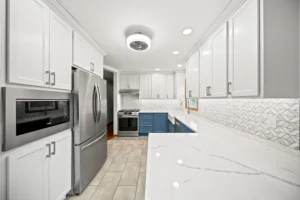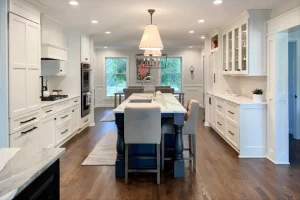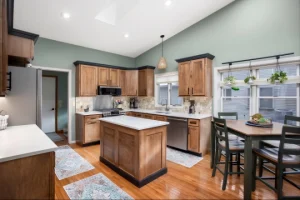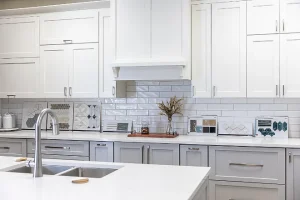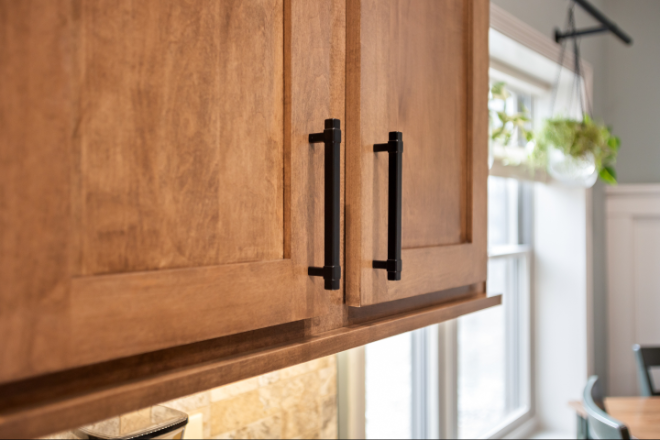
A Small Choice With a Big Impact
Will the wrong pick make your brand-new kitchen feel a little off? Do you really have to choose just one for your kitchen remodel?
In this post, you’ll learn how knobs and pulls differ, where each one works best, how to mix them, and how finish ties the whole look together.
By the end, you’ll know how to choose hardware that fits how you actually cook and live, and how Riverbend Kitchens makes that call simple right here in our Coal Valley showroom.
Knobs vs. Pulls for Kitchen Cabinets and Drawers
| Feature | Knobs | Pulls |
|---|---|---|
| Mounting | One screw | Two screws |
| Grip | Fingertip pinch | Full-hand grab |
| Best on | Doors, small drawers | Heavy drawers, big doors |
| Look | Light, understated | Bold, structured |
Knobs and pulls both open your cabinets; what changes is how they grip, where they fit, and how they look.
Knobs use one screw and suit cabinet doors, glass fronts, and small drawers. They also tend to cost less than pulls.
Pulls use two screws, give your whole hand a grip, and suit heavy drawers and larger doors.
In a lot of the kitchens we design, you’ll see pulls throughout, though some homeowners like to mix the two.
How They Install and Feel
A knob is one point of contact, so you pinch it with a finger and thumb.
A pull spans a wider area, so you can hook your whole hand under it. That extra grip is why a loaded drawer feels lighter with a pull than with a knob.
It also keeps your fingers off the cabinet face, so painted fronts stay cleaner.
How They Look on the Cabinet
Knobs sit quietly and let the cabinet door do the talking.
Pulls draw a longer line across the front and give the kitchen more structure.
Neither is right nor wrong; it comes down to the look you are after and how hard the cabinet works.
Where Knobs Earn Their Spot
Knobs shine where you want the hardware to stay out of the way.
They keep upper cabinets from feeling heavy at eye level, which matters a lot in an open kitchen.
They are a natural fit for a few specific spots:
- Upper cabinet doors, where lighter hardware keeps the wall feeling open.
- Glass-front cabinets, where a small knob keeps the focus on what’s displayed inside instead of on the hardware.
- Small drawers and spice pull-outs, where a long pull would look oversized.
Where Pulls Pull Their Weight
Because pulls work just as well on doors as on drawers, they are an easy choice to carry across the entire kitchen for one consistent look.
Pulls are better than knobs when grip and weight matter most.
The wider the drawer and the heavier the load, the more a pull earns its place.
Pulls tend to work better for:
- Heavy, deep pot-and-pan drawers.
- Tall pantry cabinets that need a firm, comfortable grab.
- Wide drawers and islands, where a longer pull keeps the front looking balanced.
Should I Mix Them or Stick to One?
You do not have to pick just one, and you do not have to mix either.
Plenty of kitchens use pulls throughout for a clean, consistent look, while others mix knobs and pulls for a little contrast.
If you do want to mix, a common pairing is knobs on the upper doors and pulls on the lower drawers and doors.
That keeps the top half light and gives the hard-working bottom half a stronger grip.
The trick to making a mix look planned is holding one thing steady: keep the same finish across every piece, and keep the shapes in the same family, so a square knob lives happily next to a square-edged pull.
How We Help You Choose Hardware in the Showroom
You should not have to make this call from a screenshot.
In our showroom, you see exactly how cabinetry, countertops, flooring, and hardware work together.
We carry 5 lines of cabinetry along with hardware, sinks, and faucets, so you can hold options against your real finishes.
The visit runs about 90 minutes, by appointment, and we keep it focused so you aren’t drowning in samples.
We start with how you actually use your kitchen and then narrow the hardware to what fits that, because function comes first, and the finish that makes you say yes comes from your taste, not ours.
Small Hardware, Big Difference: See It in Person With Riverbend Kitchens
Hardware is a small detail you touch every single day, so we treat it as part of the design instead of an afterthought tacked on at the end. We lay out your cabinetry, finishes, and hardware together in the showroom, consider how you actually use the space, and lock every choice in before we build.
Fill out our contact form today or give us a call, and we will set up a focused showroom visit where you choose hardware against your real finishes and see it all come together in full-color 3D renderings.
With one owner-led point of contact from that first visit through final selections, you will know exactly what you are getting before anything is installed.