Color Your Kitchen Right
Are you stuck choosing between safe neutrals and bold cabinet colors that actually make your kitchen stand out? Or are you wondering which kitchen cabinet colors will still look good years from now—not just today?
In this guide, you’ll learn how to choose the best kitchen cabinet colors based on style, light, and real design impact.
By the end, you’ll feel confident picking a palette that actually works in your kitchen design and lasts over time.
Kitchen Cabinet Colors: Best Options and Trends to Consider
- White cabinets create a bright, airy feel and remain a foundational choice.
- Soft neutrals like beige, taupe, and gray offer warmth and flexibility.
- Deep colors like blue, green, and black add contrast and depth.
- Wood tones introduce warmth, texture, and long-term appeal.
- Two-tone cabinets combine light and dark for visual interest.
- Custom finishes add texture and personalization to any color choice.
White Kitchen Cabinets
White kitchen cabinets remain one of the most reliable choices because they make your space feel bright, open, and easy to design around.
Instead of locking you into one style, they give you flexibility to evolve your kitchen over time without needing a full overhaul.
Today, many homeowners are shifting away from stark bright white and choosing softer variations with warmer undertones or subtle texture. This keeps the space feeling fresh without looking overly sterile.
White cabinetry reflects light across the room, which helps smaller kitchens feel larger and more comfortable to use every day.
Because white is so versatile, it pairs easily with darker countertops, brushed brass fixtures, wood shelving, or even bold accents. That flexibility is what makes it one of the best kitchen cabinet colors if you’re unsure where your design might go long-term.
Soft Neutral Kitchen Cabinets
Soft neutral cabinet colors give you a middle ground between bright white and darker tones, creating a space that feels warm but still clean.
Shades like taupe, beige, and light gray are especially effective if you want your kitchen to feel lived-in without losing that modern edge.
These warm neutrals help your kitchen feel more inviting while still acting as a flexible base for other design elements.
You can layer in bold accents, darker islands, or textured materials without clashing with your cabinetry. That makes them a strong choice for many homeowners who want both comfort and adaptability.
Another advantage is how well these tones perform under different lighting conditions.
Whether your kitchen gets strong natural light or relies more on fixtures, neutral cabinet colors tend to stay consistent throughout the day, helping the space feel balanced from morning to night.
Blue Kitchen Cabinets
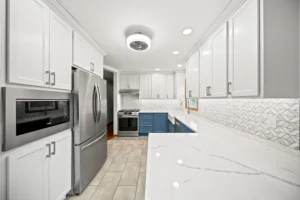
Blue kitchen cabinets—especially deep navy tones—offer a strong balance between bold design and everyday livability.
They add contrast and depth without feeling as heavy as black, making them a popular choice for homeowners who want something different but not overwhelming.
These darker blues create visual separation between cabinets, walls, and countertops, which helps your kitchen feel more layered and intentional.
If your space currently feels flat, adding navy cabinetry can immediately bring in dimension and structure.
At the same time, blue tones create a calm, grounded atmosphere, which makes them ideal for kitchens you spend a lot of time in.
When paired with brushed brass hardware or lighter surfaces, they create a refined look that feels both modern and timeless.
Green Kitchen Cabinets
Green kitchen cabinet colors are becoming more popular as homeowners look for ways to bring a natural feel into their kitchen.
Whether you go with soft greens like sage or deeper tones like forest green, this color creates a calm and grounded environment.
These hues work especially well when paired with natural materials like wood countertops, open shelving, or textured finishes. The combination helps create a cohesive design that feels intentional rather than overly styled.
Green cabinets also give you flexibility in how bold you want to go.
- Lighter shades feel subtle and easy to live with.
- Darker greens create more contrast and depth, especially when paired with lighter walls or surfaces.
Black Kitchen Cabinets
Black cabinets are one of the boldest choices you can make, but they’re also one of the most impactful when done correctly.
They create a strong contrast and give your kitchen a modern, defined look that stands out immediately.
Because black is such a dominant color, it works best when balanced with lighter elements. Pairing it with white countertops, metallic fixtures, or open shelving helps keep the space from feeling too dark or closed in.
When used strategically—like on lower cabinets or a kitchen island—black cabinetry can anchor the entire design while still allowing the rest of the kitchen to feel open and usable.
Check out this family’s new black cabinetry.
Warm Wood Cabinet Tones
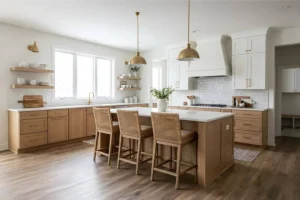
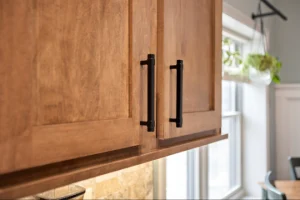
Wood cabinets are coming back because they offer something painted finishes can’t—natural texture and warmth.
Tones like walnut, cherry, and oak bring depth into your kitchen and make the space feel more comfortable and grounded.
Unlike flat cabinet paint colors, wood has natural grain variation, which adds movement and visual interest. This helps your kitchen feel more dynamic without needing bold colors or heavy contrast.
When paired with modern materials like quartz or clean-lined fixtures, it creates a balanced look that feels current without chasing trends.
Wood cabinetry also holds up well over time, both visually and structurally.
Statement Cabinet Colors
Statement cabinet colors are for when you want your kitchen to stand out instead of blend in.
Shades like teal or burgundy create strong focal points and can completely change the feel of the space.
The key is using these colors strategically rather than everywhere. Applying them to a kitchen island or lower cabinets allows you to introduce bold color without overwhelming the entire room.
When paired with neutral cabinetry or softer tones, statement colors create contrast while still keeping the overall design balanced and intentional.
Two-Tone Kitchen Cabinets
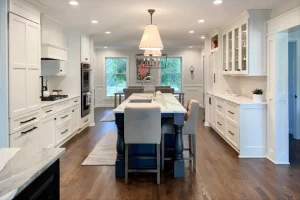
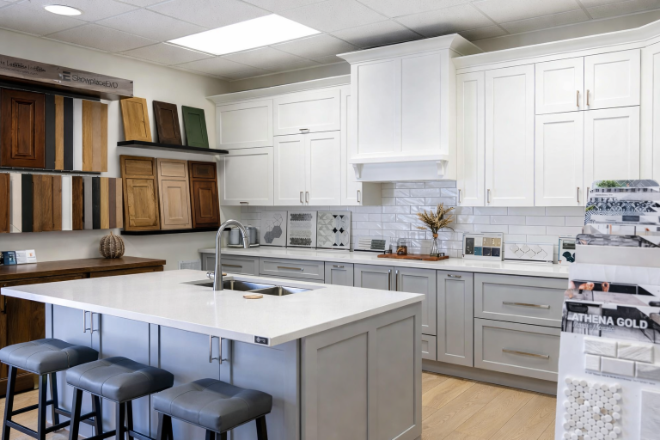
Two-tone cabinets give you the ability to combine different cabinet colors in a way that adds depth without making the kitchen feel chaotic.
This approach is especially useful if you like both light and dark tones but don’t want to commit to just one.
By mixing colors—typically darker lower cabinets with lighter upper cabinets—you create a natural visual balance. This keeps the kitchen grounded while still feeling open and bright.
Two-tone cabinetry also helps break up large sections of cabinets, making the space feel more dynamic and less repetitive.
Custom Cabinet Finishes
Custom cabinet finishes allow you to go beyond standard paint colors and create something more tailored to your style.
Instead of choosing from a limited palette, you can explore finishes that add texture, depth, and personality.
Options like matte, satin, or distressed finishes each create a different look and feel.
- Matte finishes lean more towards modern.
- Satin adds a subtle sheen.
- Distressed finishes bring in character and variation.
This level of customization makes it easier to match your cabinetry with other materials in your kitchen, ensuring everything works together instead of feeling pieced together.
Riverbend Kitchens offers custom cabinetry as part of our services, so you can attain the right look for your kitchen.
Do you want custom or semi-custom cabinets?
How Cabinet Color Impacts Kitchen Design
Cabinet color isn’t just about style—it directly affects how your kitchen looks and functions.
The colors you choose influence how light moves through the space, how large it feels, and how cohesive the overall design appears.
Lighter colors help reflect light and make your kitchen feel more open, while darker tones create contrast and define different areas. That balance is what allows you to shape how your kitchen feels without changing the layout.
When your cabinet colors complement your walls, countertops, and fixtures, the entire kitchen feels more intentional.
Instead of competing elements, everything works together to create a space that feels complete and well-designed.
Riverbend Kitchens uses full-color 3D renderings during the design phase so you can see exactly how cabinet colors will look in your space.
From Safe to Statement: Cabinet Picks Pay Off with Riverbend Kitchens
Riverbend Kitchens delivers a structured, design-first process that helps you choose kitchen cabinet colors based on how your space actually functions, not just what looks good on a sample.
With detailed planning, guided selections, and full-color 3D renderings, you can see exactly how your cabinets, finishes, and layout come together before anything is built.
If you’re ready to create a kitchen that feels intentional, balanced, and built for real life, fill out our contact form today or give us a call.