Key Points
- Statement lighting works best when scale, placement, and function are planned together.
- Layered lighting creates better task visibility and a warmer overall ambiance.
- The right fixtures can define zones and completely transform how a kitchen feels.
Lights With Attitude: When Illumination Becomes the Design
Ever notice how some kitchens feel finished the moment the lights are turned on? Or how one bold fixture can suddenly give a room confidence, personality, and power?
In this guide, you’ll learn about different kitchen lighting ideas, where they perform best, and how to choose fixtures that balance function and style.
By the end, you’ll know how to use lighting to create focal points, enhance daily use, and completely transform how your kitchen feels at every hour of the day.
Kitchen Statement Lighting Ideas
- Oversized or statement pendant lights.
- Glass globe pendants.
- Linear chandeliers over islands.
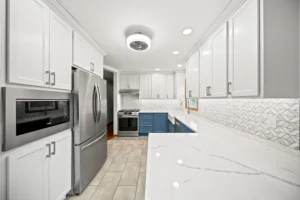
- Flush-mount statement fixtures.
- Mixed-material lighting.
- Brass or warm metal finishes.
- Sculptural or geometric light shapes.
- Layered lighting.
- Multiple matching pendants in a row.
- Mixed or mismatched pendants with a shared material.
- Natural or woven textures.
- Color-forward or bold fixture finishes.
- Vintage-inspired or retro-style fixtures.
- Minimalist statement lighting.
- Table or accent lamps as decorative kitchen lighting.
1. Oversized or Statement Pendant Lights
Oversized pendant lights immediately signal confidence in a kitchen’s design.
Their scale draws the eye downward, anchoring the ceiling and giving the room a sense of structure.
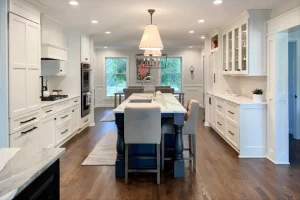
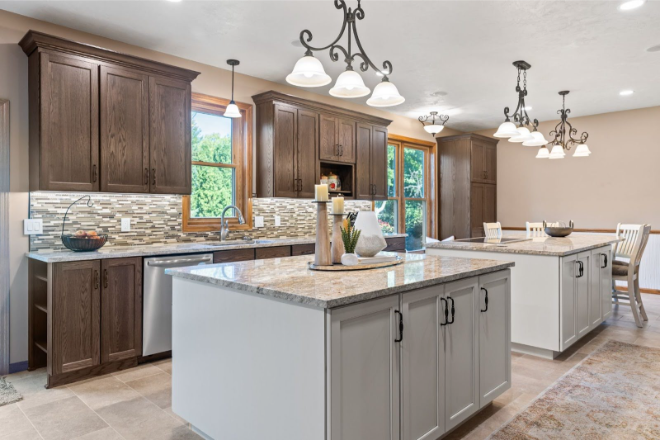
Over a kitchen island, these pendants serve as both lighting and visual punctuation, making the island feel like a true centerpiece rather than an afterthought.
In open living spaces near the Mississippi River corridor, oversized pendants help define the kitchen without walls, using lighting to separate cooking, dining, and living zones naturally.
2. Glass Globe Pendants
Glass globe pendant lights are popular because they balance softness and brightness.
Their rounded shapes complement sharp cabinet lines and stone surfaces while allowing light to spread evenly across the space.
Clear glass globes highlight the bulb and add sparkle, while frosted glass creates a warmer glow that feels especially inviting at night.
Kitchens near Vander Veer Botanical Park often use globe pendants to maintain an open, airy feeling while still adding elegance and visual interest.
3. Linear Chandeliers Over Islands
Linear chandeliers are designed specifically for long surfaces like kitchen islands.
Instead of concentrating light in one spot, they distribute illumination evenly across prep, seating, and serving areas.
This makes them ideal for kitchens where the island serves multiple purposes throughout the day.
In homes throughout Eldridge and Geneseo, linear fixtures often complement sleek cabinetry and modern layouts, reinforcing clean lines while providing strong, functional lighting.
4. Flush-Mount Statement Fixtures
Flush-mount ceiling lights are often overlooked, but when chosen thoughtfully, they can still make a bold statement.
These fixtures work especially well in kitchens with lower ceilings or limited vertical space, where pendant lights might feel intrusive.
Oversized flush mounts or designs featuring brass, glass, or sculptural detailing allow ceiling lights to enhance decor without sacrificing headroom, making them practical and visually impactful.
5. Mixed-Material Lighting
Mixed-material light fixtures add depth by combining textures like metal, glass, wood, or leather.
This layered approach helps lighting connect visually with cabinetry, flooring, and hardware rather than floating independently.
In neighborhoods like the Village of East Davenport, where historic character meets modern updates, mixed-material lighting often bridges old and new to create a cohesive look that feels intentional and lived-in.
6. Brass and Warm Metal Finishes
Warm metal finishes such as brass and copper bring instant warmth and sophistication to kitchen lighting.
These finishes reflect light softly, creating a warm glow that enhances both daytime brightness and nighttime ambiance.
Brass fixtures pair especially well with white cabinetry, wood accents, and darker stone counters, making them a versatile choice for kitchens that aim to feel inviting rather than stark.
7. Sculptural or Geometric Light Shapes
Sculptural and geometric light fixtures function like art pieces that also illuminate the room.
Unusual shapes, bold angles, or unexpected silhouettes add personality and visual power to the kitchen.
These fixtures are most effective when the surrounding finishes are more restrained, allowing the light to stand out without overwhelming the space.
8. Layered Lighting With a Statement Fixture
Statement lighting works best as part of a layered lighting plan.
Combining a bold fixture with task lighting and ambient ceiling lights ensures the kitchen remains functional while still feeling designed.
This approach prevents harsh shadows, improves visibility during meal prep, and allows the statement fixture to shine visually without carrying the full burden of illumination.
9. Multiple Matching Pendants in a Row
Using multiple matching pendants creates rhythm and balance, especially over long kitchen islands.
This repetition feels organized and intentional, reinforcing symmetry within the room.
In larger kitchens or homes near Palmer Hills Golf Course, rows of pendant lights help scale lighting to the size of the space while maintaining a clean, cohesive look.
10. Mixed or Mismatched Pendants With a Shared Element
Mismatched pendants can still feel cohesive when they share a common material, finish, or shape.
This approach introduces personality and a curated feel without chaos.
It works particularly well in kitchens that flow into dining rooms or living spaces, where a slightly eclectic look adds character and warmth.
11. Natural or Woven Texture Lighting
Lighting made from natural or woven materials like rattan or wood adds softness to kitchens dominated by hard surfaces.
These textures create warmth and visual contrast, making the room feel more relaxed and cozy.
At night, woven fixtures cast gentle patterns that enhance ambiance and make the kitchen feel less utilitarian.
12. Color-Forward Statement Fixtures
Color-forward lighting turns fixtures into decor.
Bold hues can contrast cabinetry, echo accent colors, or introduce playful pops of personality.
This approach allows homeowners to experiment with color without committing to permanent changes, making lighting a flexible way to refresh the space over time.
13. Vintage or Retro-Inspired Lighting
Vintage-inspired lighting blends classic shapes with modern function.
Lantern styles, globe bulbs, and traditional metal finishes add character while still suiting contemporary kitchens.
These fixtures feel familiar yet fresh, making them a popular choice for homeowners who want timeless appeal without leaning too traditional.
14. Minimalist Statement Lighting
Minimalist lighting proves that simplicity can still make a statement.
Clean lines, subtle materials, and oversized proportions create quiet sophistication.
These fixtures suit modern kitchens where restraint and balance define the overall style, allowing lighting to enhance the space without competing with other design features.
15. Decorative Table or Accent Lamps in Kitchens
Decorative table or accent lamps introduce unexpected warmth into kitchen spaces.
Placed on counters, shelves, or sideboards, they add soft illumination and a cozy ambiance that feels more like a living area than a workspace.
In the evening, these lamps provide gentle light that complements overhead fixtures and makes the kitchen feel welcoming long after dinner is done.
How to Choose the Right Lighting Ideas for Your Kitchen
Choosing the right kitchen lighting ideas starts with understanding how your kitchen is actually used, not just how you want it to look.
Lighting should support cooking, dining, movement, and gathering while also acting as a design element that ties the room together. The best choices balance function, scale, and style so fixtures feel intentional rather than decorative add-ons.
Start by identifying your primary work zones. Areas like the kitchen island, perimeter counters, and sink need strong task lighting to illuminate prep and cleanup. Pendant lights, directional ceiling lights, and under-cabinet fixtures help eliminate shadows and make everyday tasks easier and safer.
Next, consider scale and ceiling height. Oversized pendant lights or bold ceiling fixtures work best in kitchens with enough vertical space to support them visually. In lower ceilings, flush-mount or semi-flush fixtures can still create visual interest through shape, material, or finish without overwhelming the room.
The goal is proportion—fixtures should feel connected to the space, not oversized for attention alone.
Material and finish selections also play a major role in how lighting feels. Glass spreads light evenly and keeps spaces feeling open, while metals like brass, copper, or matte black add warmth and contrast. Natural materials such as wood or woven textures soften hard surfaces and introduce a cozy atmosphere, especially in kitchens that open into dining or living spaces.
Finally, think about how lighting connects to the rest of your design. Fixtures should complement cabinetry, countertops, and flooring rather than compete with them. When lighting is chosen as part of the overall kitchen plan, it enhances flow, reinforces focal points, and helps the entire space feel finished instead of pieced together.
See Your Kitchen in a New Light With Riverbend Kitchens
When it comes to kitchen statement lighting ideas, Riverbend Kitchens designs lighting as part of the full kitchen experience, not as a last-minute decor decision. From pendant lights over the kitchen island to layered ceiling lights that support task lighting and ambiance, every fixture is chosen to enhance function, balance, and visual interest.
If you’re ready to completely transform your kitchen with lighting that actually works for how you live, fill out our contact form today or give us a call. Riverbend Kitchens will help you craft a kitchen that fits your space, your style, and how you use it every day.
FAQs
What kind of lighting is best for the kitchen?
The best kitchen lighting combines ambient light for full-room visibility with task lighting over prep areas. Add accent or decorative fixtures to enhance mood and style.
How can I improve the lighting in my kitchen?
To improve kitchen lighting, add under-cabinet lights to reduce shadows, use pendants over islands, and layer ambient, task, and accent lighting for better function and flow.
What types of light fixtures are best for kitchen lighting?
Top kitchen lighting fixtures include recessed lights for general use, pendants for islands, and under-cabinet lights for prep zones. Mixing types ensures both function and style.